First Round of Abstract Submission Ends: Dec 30, 2026
Extended Early Bird Ends: May 28, 2026
Plenary Speakers
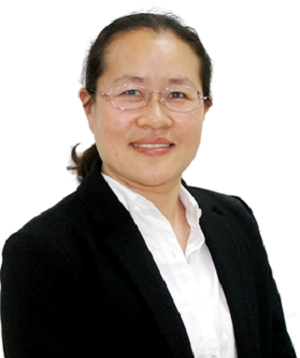
Prof. Yang Haiping
Huazhong University of Science and Technology, China
Title: Biomass Electrified Conversion to H2 and High Value Carbon Materials
Haiping Yang is a Chief Professor in Huazhong University of Science and Technology , she is focused on Biomass/solid wastes thermochemical conversion for green H2 production, liquid fuel and biochar. So far she has published over 300 SCI papers, 10 book chapters and SCI citation is over 30000 with 21 papers cited in ESI. Now she owns National Science Fund for Distinguished Young Scholars program (China), the Excellent Young Scholars program (China), Newton Advanced Fellowships, the Most Cited Chinese Researchers (Elsevier 2014-2024) and Highly-cited-researchers @ Clarivate (2024). She is associated editor of Fuel Processing Technology, and board member of Energy Conversion and Management, Fuel, Journal of the Energy Institute, Journal of Analytical and Applied Pyrolysis, Cabon Capture Science and Technology and Green Carbon, etc. She is also Board Directors member of Combustion Institute and Chinese Renewable Energy Society.
Prof. Suddhasatwa Basu
IIT Delhi, India
Title: Will update soon.
Prof. Suddhasatwa Basu holds Federation of Indian Petroleum Industry (FIPI) Chair Professor on Clean Energy at Indian Institute of Technology (IIT) Delhi. He was the Director of CSIR-Institute of Minerals & Materials Technology, Bhubaneswar, India and the Director of Central Institute Mining & Fuel Research, Dhanbad, India. He has vast work experience on development of materials for energy conversion and storage devices – Green H2 generation – water electrolyser & fuel cell technologies and rechargeable battery materials, electro-synthesis, wastes to wealth technologies for circular economy. He is a Fellow of Indian National Science Academy, National Academy of Science of India, Indian National Academy of Engineering, Royal Society of Chemistry UK and received several awards and Editor/Ed Board member of several international journals.
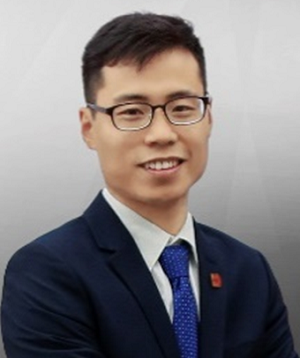
Prof. Tao Ma
Shanghai Jiao Tong University, China
Title: Development and Demonstration of High-Efficiency Colored Photovoltaics for Building Integration
Dr Tao Ma received his PhD from the Hong Kong Polytechnic University in 2015, and now he is a full Professor at Shanghai Jiao Tong University and Associate Dean at Tibet University. His research is mainly related to fundamental research and applications of solar photovoltaic technology. He has acted as a Principal Investigator of 18 research projects from MOST, NSFC etc, and he has published over 150 papers in high-impact international journals with a total citation of 15,000 and h-index of 67, including 15 ESI highly cited papers and 2 ESI hot papers. Dr. Ma has received a number of awards, such as ‘Clarivate Highly Cited Researchers 2025’, ‘Most Cited Chinese Researcher by Elsevier (2021-2025)’, ‘World’s Top 2% most-cited Scientists (2020-2025)’, ‘Highly Ranked Scholar (Top 0.05%) in Photovoltaic & Energy’, ‘Excellent Young Scientist Award in Energy and Built Environment’, ‘Outstanding PhD Thesis Award’ etc.. He currently serves as the editorial board member of several journals including ‘Applied Energy (IF: 10.1)’, ‘Solar Energy Materials & Solar Cells (IF: 6.3)’ and Photovoltaics.
Prof. Junmin Wang
USA
Title: Powering Electrified Mobility: Innovations in Energy Utilization and Delivery
Junmin Wang is the Fletcher Stuckey Pratt Chair in Engineering and a Professor in Mechanical Engineering at University of Texas at Austin. In 2008, he started his academic career at Ohio State University where he was early promoted to Associate Professor in September 2013 and then very early promoted to Full Professor in June 2016. In 2018, he joined University of Texas at Austin as the Accenture Endowed Professor in Mechanical Engineering. Professor Wang has a wide range of research interests covering control, modeling, estimation, optimization, diagnosis, and AI for dynamical systems, especially for automotive, vehicle, transportation, mobility, human-automation, robotic, energy storage, and manufacturing applications. His research contributions include the development of control and estimation methods that advance efficiency, driving safety, and emissions performance of conventional, electrified, connected, and autonomous/automated vehicles. He has five years of full-time industrial research experience (2003–2008) at Southwest Research Institute (San Antonio, Texas), where he was a Senior Research Engineer and led research projects sponsored by more than 50 industrial companies and governmental agencies worldwide. His research programs at UT Austin and Ohio State University have been funded by federal agencies and industrial companies such as National Science Foundation (NSF), Office of Naval Research (ONR), Department of Energy (DOE), U.S. Department of Transportation (DOT), National Highway Traffic Safety Administration (NHTSA), Army Research Laboratory (ARL), Texas Department of Transportation, GM, Ford, Honda, Tenneco, Eaton, Ftech, Denso, and others.
Professor Wang is the author or co-author of more than 425 peer-reviewed publications (8 of which have received best paper awards from IEEE, ASME, and SAE), including 207 journal articles and 13 U.S. and European patents. He is a recipient of the ASME Charles Stark Draper Innovative Practice Award, IEEE Best Vehicular Electronics Paper Award, IEEE Andrew P. Sage Best Transactions Paper Award, IEEE Transactions on Fuzzy Systems Outstanding Paper Award, Ohio State University Lumley Interdisciplinary Research Award, Ohio State University Harrison Faculty Award for Excellence in Engineering Education, National Science Foundation (NSF) CAREER Award, Ohio State University Lumley Research Award, SAE International Vincent Bendix Automotive Electronics Engineering Award, and Office of Naval Research Young Investigator Program (ONR-YIP) Award. He is an IEEE Vehicular Technology Society Distinguished Lecturer, IEEE Systems, Man, and Cybernetics Society Distinguished Lecturer, IEEE Industrial Electronics Society Distinguished Lecturer, Fulbright Distinguished Scholar, SAE Fellow, ASME Fellow, AAIA Fellow, and IEEE Fellow.
Prof. Youguang Guo
University of Technology Sydney, Australia
Title: To be confirmed.
Youguang Guo is currently a Professor in the Discipline of Electrical Power and Energy Systems, School of Electrical and Data Engineering, University of Technology Sydney (UTS).
He received the B.E. degree from Huazhong University of Science and Technology (HUST), China in 1985, the M.E. degree from Zhejiang University, China in 1988, and the PhD degree from UTS, Australia in 2004, all in electrical engineering.
From 1988 to 1998, he was an associate lecturer/lecturer in the Department of Electric Power Engineering, HUST. From March 1998 to July 2008, he worked as visiting research fellow, PhD candidate, postdoctoral fellow and research fellow in the Centre for Electrical Machines and Power Electronics, Faculty of Engineering, UTS. Since 2008, he has been an academic with the Faculty of Engineering and Information Technology, UTS.
His research fields include measurement and modelling of magnetic properties of magnetic materials, electrical machine design and optimization, electric motor drives and control. In these fields he has published over 600 refereed technical papers, with a Scopus H-index 68 or Google Scholar H-index 75.
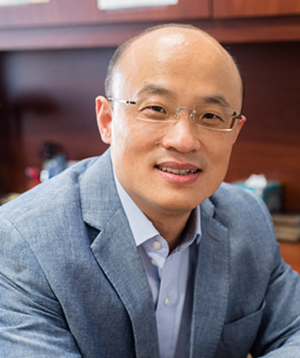
Prof. Ao Xia
Chongqing University, China
Title: Advanced Gaseous Biofuel Production Technologies for Renewable Distributed Energy Systems
Dr. Ao Xia is a professor in the School of Energy and Power Engineering at Chongqing University (CQU). He completed his PhD research in 2013 in Energy Engineering from Zhejiang University (ZJU). He worked as a post-doctoral researcher in the Environmental Research Institute (ERI) at University College Cork (UCC) from 2014 to 2016. He has published over 200 peer-reviewed papers in top journals such as Chemical Society Reviews, Trends in Biotechnology, Renewable and Sustainable Energy Reviews, Chemical Science, International Journal of Heat and Mass Transfer, Green Chemistry, Water Research, Applied Energy, Biotechnology Advances, and Energy, with a total citation of over 11000 and an H-index of 65. He serves as a Task Expert in Task 45: Renewable Hydrogen Production of Hydrogen Technology Collaboration Programme (TCP) in International Energy Agency (IEA), and a Steering Committee Member of APEC Research Center for Advanced Biohydrogen Technology (ACABT). He also serves as an Editorial Board Member and a Lead Guest Editor for 5 peer-reviewed journals. He was awarded the Chu Kochen Scholarship for the highest honours at ZJU (2013), was selected as one of the Young Elite Scientists sponsored by the China Association for Science and Technology (2018) and Hundred Talents Program of Chongqing (2019), and was received the National Science Fund for Excellent Young Scholars (2020), the Science Fund for Distinguished Young Scholars of Chongqing (2023), and Young Scientist Award from China Renewable Energy Society (2024). His research interests include bioenergy, biofuels, hydrogen production, waste-to-energy, and distributed energy systems.
Prof. Alexander H. Slocum
Massachusetts Institute of Technology, USA
Title: To be confirmed.
Will update soon.
Prof. Minhua Shao
Hong Kong University of Science and Technology, Hong Kong
Title: To be confirmed.
Will update soon.
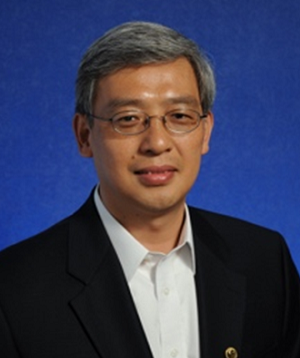
Prof. Zhihua Qu
University of Central Florida, USA
Title: To be confirmed.
Zhihua Qu (M’90-SM’93-F’09) received the Ph.D. degree in electrical engineering from the Georgia Institute of Technology, Atlanta, in June 1990. Since then, he has been with the University of Central Florida (UCF), Orlando. He served as the Chair of Electrical and Computer Engineering Department (2010-2021 and 2009-2004). Currently, he is the Thomas J. Riordan & Herbert C. Towle Chair and Pegasus Professor of Electrical Engineering, and the Founding Director of RISES (Resilient, Intelligent and Sustainable Energy Systems, a university research center at UCF). His areas of expertise are nonlinear systems and control, with applications to autonomous systems and energy/power systems. His most recent work focuses upon cooperative control and plug-and-play operation of networked systems, distributed optimization and game algorithms, and resilient networked controls. In energy systems, his research covers distributed energy resources, dynamic stability of power systems, microgrid control, distributed generation and load sharing control, distributed VAR compensation, distributed optimization, and cooperative control.
Dr. Qu is the author of four books, including Cooperative Control of Dynamical Systems (Springer-Verlag, 2009) and over 500 refereed publications in his fields of expertise. He received 2026 Medal of Societal Impact from University of Central Florida. He is a Fellow of IEEE, a Fellow of AAAS, and a member of National Academy of Artificial Intelligence.
Prof. Zafar Said Sher
United Arab Emirates University, UAE
Title: To be confirmed.
Will update soon.
Prof. Michael Negnevitsky
University of Tasmania, Australia
Title: Preventing Large-Scale Emergencies in Modern Power Systems: AI Approach
Professor Michael Negnevitsky is Chair in Power Engineering and Computational Intelligence and Director of the Centre for Renewable Energy and Power Systems, University of Tasmania, Australia. The primary focus of his research is smart grids, power system security, demand response, and isolated and remote area power systems with high renewable energy penetration. Professor Negnevitsky authorised more than 500 research publications and received 4 patents for inventions. He is Fellow of IEEE, Fellow of Engineers Australia and Fellow of IARIA. Professor Negnevitsky is Chair of the IEEE PES Energy Development and Power Generation Committee, Chair of the IEEE PES International Practices Subcommittee, Chair of the IEEE PES Working Group on High Renewable Energy Penetration in Remote and Isolated Power Systems, Member of CIGRE AP C4 (System Technical Performance) and CIGRE AP C6 (Distribution Systems and Dispersed Generation), Australian Technical Committee.